Pharmaceutical Production

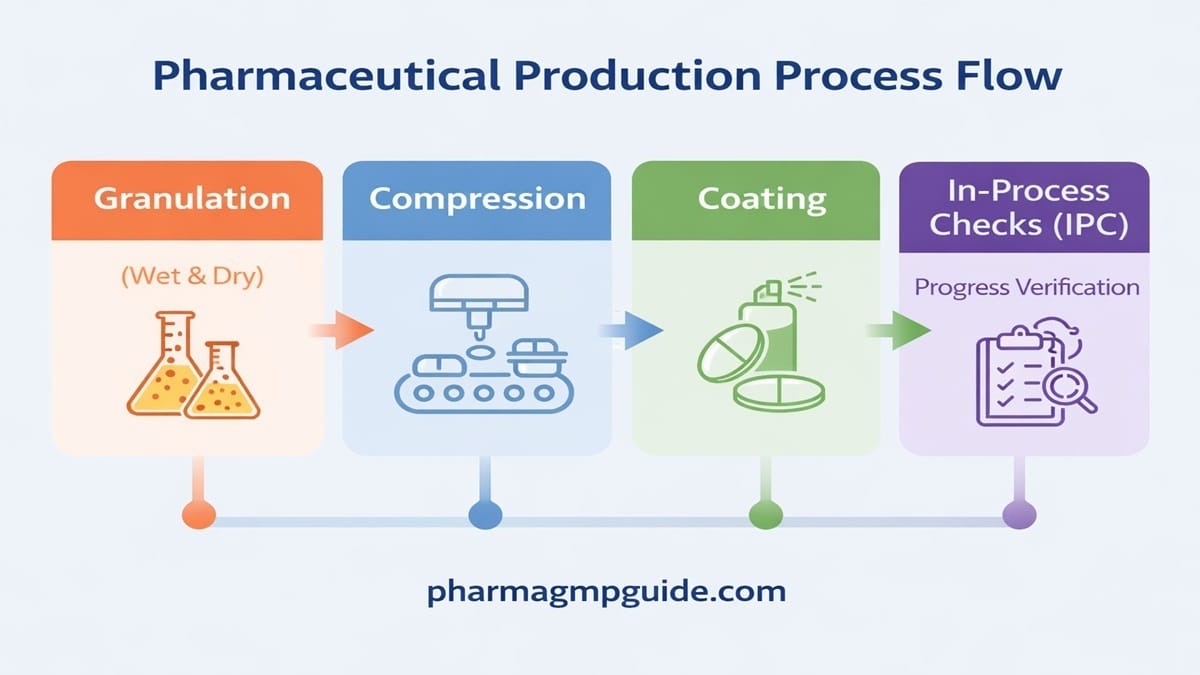
Pharmaceutical production process flow chart showing granulation compression coating and in-process checks IPC in drug manufacturing
Step-by-step pharmaceutical production process including granulation, compression, coating, and IPC checks as per GMP guidelines.

The Pharmaceutical Production category is one of the most critical sections in drug manufacturing, covering all major processes involved in converting raw materials into finished pharmaceutical products under strict GMP guidelines.

This section provides detailed, step-by-step guidance on key manufacturing stages such as granulation, tablet compression, coating, capsule filling, liquid manufacturing, and in-process quality control (IPC). Each topic is explained with practical industry examples to help professionals understand real-time production challenges and solutions.

Whether you are a student, production operator, or working in the pharmaceutical industry, this category will help you build strong technical knowledge, improve GMP compliance understanding, and prepare for interviews with real-life troubleshooting insights.

Key Topics Covered:

Pharmaceutical production directly impacts product quality, safety, and efficacy. Even a small error in the manufacturing process can lead to batch rejection or regulatory issues, making it essential to understand each step in detail.

Explore the articles below to understand each pharmaceutical manufacturing process in detail and improve your GMP knowledge step-by-step.

Pharmaceutical Production, Compression

Tablet Compression Process in Pharma: 7 Critical Steps, IPC Checks & Troubleshooting Guide

Tablet compression is one of the most critical stages in pharmaceutical manufacturing because it directly affects tablet quality, hardness, weight uniformity, and dissolution performance. After granulation is completed, granules are compressed into tablets using specialized compression machines under controlled GMP conditions. Understanding the compression process helps operators, pharmacists, and students maintain consistent product quality and […]

Pharmaceutical Production, Granulation

Direct Compression in Pharma: Advantages & Limitations

Introduction In pharmaceutical manufacturing, tablet production can be performed using different techniques such as wet granulation, dry granulation, and direct compression. Direct compression in pharma is one of the simplest and fastest methods, where powders are compressed directly into tablets without any granulation step. This process reduces manufacturing time, minimizes moisture exposure, and improves operational

Pharmaceutical Production, Granulation

Binder Preparation and Addition in Granulation: Step-by-Step GMP Guide

Introduction In pharmaceutical manufacturing, granulation plays a critical role in improving powder flow, compressibility, and tablet quality. One of the most important steps in wet granulation is binder preparation and addition. A properly prepared binder ensures uniform granule formation, reduces dust generation, and improves tablet strength. Binder preparation in granulation is not just a mixing

Pharmaceutical Production

Common Granulation Problems & Solutions in Pharmaceuticals: Complete GMP Troubleshooting Guide

Introduction Granulation is one of the most critical steps in pharmaceutical tablet manufacturing. It improves powder flow, compressibility, and content uniformity. However, during wet or dry granulation, several problems can occur that affect product quality, yield, and process efficiency. Understanding common granulation problems and solutions helps production and quality teams prevent batch failures and maintain

Pharmaceutical Production, In-Process Checks (IPC)

In-Process Checks During Tablet Compression: GMP Requirements and Practical Challenges

Introduction Tablet compression is one of the most critical stages in pharmaceutical manufacturing. Even when granulation and blending are performed correctly, poor control during compression can lead to major quality defects such as weight variation, hardness issues, capping, lamination, and dissolution failure. That is why in-process checks (IPCs) are mandatory under Good Manufacturing Practices (GMP).

Pharmaceutical Production, Granulation

Wet Granulation vs Dry Granulation: Key Differences, Advantages & When to Use Each

Tablet manufacturing is one of the most common dosage forms in the pharmaceutical industry. Before compression, powders must be converted into granules to improve flow, compressibility, and uniformity. Two main granulation techniques are used: wet granulation and dry granulation. Understanding the differences between these methods is crucial for selecting the most suitable process based on

Pharmaceutical Production, Granulation

Dry Granulation Process in Tablet Manufacturing: Step-by-Step Guide

Introduction to Dry Granulation Dry granulation is a tablet manufacturing process used to convert fine powder into granules without using any liquid binder. This makes it especially useful for moisture-sensitive and heat-sensitive drugs. In pharmaceutical production, granulation improves powder flow, content uniformity, and compressibility — all essential for making high-quality tablets. While wet granulation process

Wet granulation process in pharmaceutical manufacturing showing powder blending, binder addition, drying, and granule formation steps
Pharmaceutical Production, Granulation

Wet Granulation in Pharma: 10 Proven Steps, Process, Equipment & Real Examples

Introduction In pharmaceutical manufacturing, even a small mistake in granulation can lead to tablet defects, batch failure, or regulatory issues. That’s why the wet granulation process in pharmaceutical manufacturing is one of the most critical steps in tablet production. It improves powder flow, ensures uniform drug distribution, and helps produce strong, high-quality tablets that meet

Pharmaceutical Production, Compression

Tablet Manufacturing Process in Pharmaceuticals: Step-by-Step GMP Guide

Introduction Tablet manufacturing is one of the most common and important processes in the pharmaceutical industry. Tablets are widely used because they are easy to administer, stable, and cost-effective. However, making a tablet is not just mixing powders and compressing them — it is a highly controlled GMP process where every step affects product quality,

Pharmaceutical Production, Granulation

Granulation Process in Tablet Manufacturing: Complete Step-by-Step Guide

In pharmaceutical manufacturing, producing a high-quality tablet is not just about mixing ingredients—it starts with one of the most critical steps: granulation. Without proper granulation, powders may not flow evenly, compress correctly, or deliver consistent drug dosage, leading to serious quality issues in the final product. The granulation process transforms fine powder particles into uniform,

Scroll to Top