Pharmaceutical Production

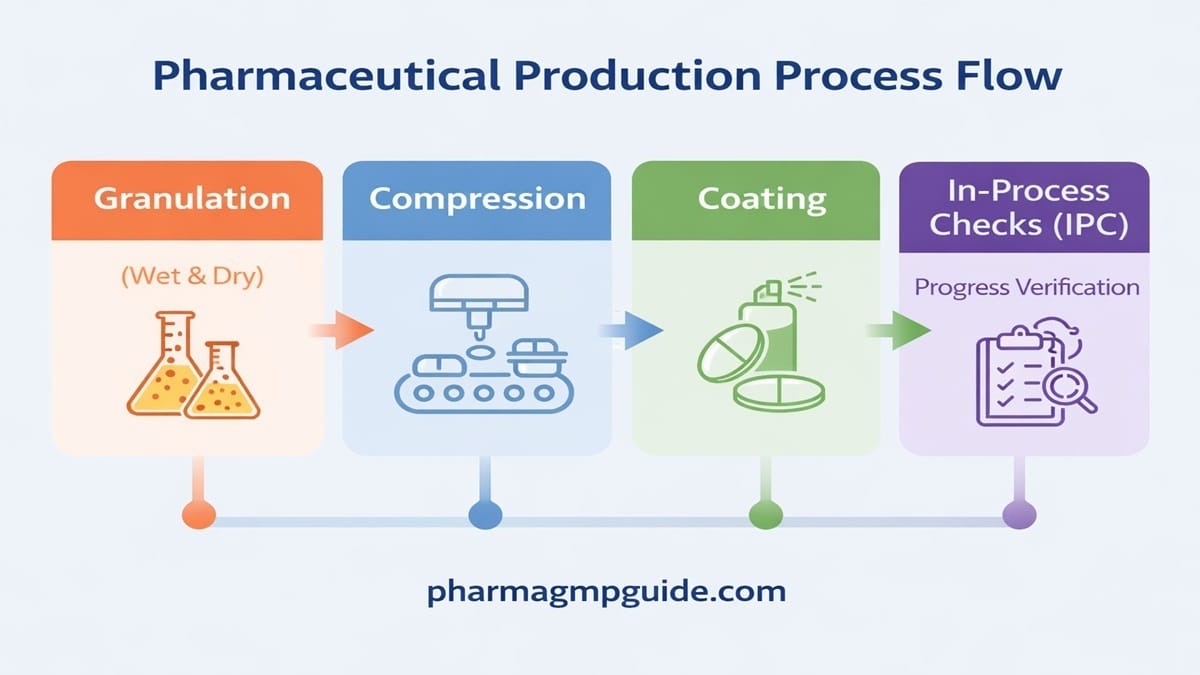
Pharmaceutical production process flow chart showing granulation compression coating and in-process checks IPC in drug manufacturing
Step-by-step pharmaceutical production process including granulation, compression, coating, and IPC checks as per GMP guidelines.

The Pharmaceutical Production category is one of the most critical sections in drug manufacturing, covering all major processes involved in converting raw materials into finished pharmaceutical products under strict GMP guidelines.

This section provides detailed, step-by-step guidance on key manufacturing stages such as granulation, tablet compression, coating, capsule filling, liquid manufacturing, and in-process quality control (IPC). Each topic is explained with practical industry examples to help professionals understand real-time production challenges and solutions.

Whether you are a student, production operator, or working in the pharmaceutical industry, this category will help you build strong technical knowledge, improve GMP compliance understanding, and prepare for interviews with real-life troubleshooting insights.

Key Topics Covered:

Pharmaceutical production directly impacts product quality, safety, and efficacy. Even a small error in the manufacturing process can lead to batch rejection or regulatory issues, making it essential to understand each step in detail.

Explore the articles below to understand each pharmaceutical manufacturing process in detail and improve your GMP knowledge step-by-step.

capsule manufacturing process illustration showing automatic capsule filling machine in pharmaceutical production
Pharmaceutical Production, Capsule Manufacturing

Capsule Manufacturing Process: 9 Powerful Tips to Avoid Critical GMP Mistakes

Introduction Capsules are one of the most commonly used oral dosage forms in the pharmaceutical industry because they are easy to swallow, provide accurate dosing, and improve patient compliance. The capsule manufacturing process involves multiple controlled steps such as material preparation, filling, sealing, inspection, and packaging. In real pharmaceutical manufacturing, capsule production is not just […]

Stainless steel liquid manufacturing compounding tank in pharmaceutical GMP production area with operators monitoring mixing process
Pharmaceutical Production, Liquid Manufacturing

Liquid Manufacturing in Pharma: 9 Essential GMP Steps, Benefits, Risks & Real Industry Guide

Liquid manufacturing is one of the most important areas in pharmaceutical production. Many medicines, like syrups, suspensions, solutions, and oral liquids, are prepared through liquid manufacturing processes. In a real pharmaceutical industry environment, this process is not only about mixing ingredients — it involves strict GMP controls, validated equipment, and accurate documentation to ensure product

Tablet compression defects including capping, lamination, sticking, picking, chipping and weight variation with IPC and GMP troubleshooting overview
Pharmaceutical Production, Manufacturing Defects & Troubleshooting

10 Tablet Compression Defects Every Pharma Professional Must Know (Causes, IPC & GMP Fixes)

Tablet compression is one of the most critical stages in solid oral manufacturing. Even when granulation and blending are perfect, small mistakes during compression can lead to major defects like capping, lamination, sticking, picking, or weight variation. These defects not only affect product quality but also create regulatory risks during audits. In real manufacturing environments,

Tablet weight variation IPC check using analytical balance during tablet compression in pharmaceutical manufacturing
Pharmaceutical Production, In-Process Checks (IPC)

Tablet Weight Variation: 11 Common Causes, IPC Checks & GMP Solutions Explained

Introduction Tablet weight variation is one of the most common in-process problems during pharmaceutical tablet manufacturing. Even a small change in tablet weight can affect drug content uniformity, dissolution, stability, and regulatory compliance. That is why GMP guidelines require strict monitoring through In-Process Checks (IPC) during compression. In real manufacturing environments, weight variation usually indicates

Equipment cleaning and line clearance in tablet manufacturing showing GMP cleaned status label and operator verification process
Pharmaceutical Production, Equipment & Machinery

Equipment Cleaning and Line Clearance in Tablet Manufacturing: Complete GMP Guide with Steps, Checklist & Common Mistakes

Introduction In pharmaceutical tablet manufacturing, equipment cleaning and line clearance are critical GMP activities that prevent cross-contamination, product mix-ups, and regulatory deviations. Before starting any production batch, the manufacturing area and equipment must be cleaned, inspected, and verified to ensure they are free from previous product residues. Cleaning removes physical and chemical contaminants, while line

Pharmaceutical Production, In-Process Checks (IPC)

In-Process Checks (IPC) in Pharma: Limits, Acceptance Criteria, GMP Checklist & Real Examples

Introduction In pharmaceutical manufacturing, product quality cannot depend only on final testing. Quality must be monitored during manufacturing itself. This is where In-Process Checks (IPC) become critical. IPC ensures that tablets, capsules, and other dosage forms remain within predefined limits during production. Proper IPC limits and acceptance criteria help prevent batch failure, deviations, and regulatory

Pharma tablet coating defect inspection in pharmaceutical production showing GMP troubleshooting and tablet quality checking process
Pharmaceutical Production, Coating

7 Common Coating Problems in Pharma & Proven Troubleshooting Solutions (GMP Guide)

Introduction Tablet coating is one of the most critical stages in pharmaceutical manufacturing because it affects product appearance, stability, dissolution, and patient compliance. Even a small variation in spray rate, inlet temperature, or pan speed can cause visible defects or functional failures. Common Coating problems in pharma usually occur due to incorrect process parameters, poor

Rotary tablet compression machine operating under GMP controls in pharmaceutical manufacturing unit
Pharmaceutical Production, Compression, Equipment & Machinery

Tablet Compression Machine: 7 Proven Secrets & Ultimate GMP Guide

The tablet compression machine is one of the most critical pieces of equipment in pharmaceutical manufacturing. It converts granules or powder into tablets by applying controlled pressure. If compression parameters are not properly controlled, it can lead to serious tablet defects like capping, lamination, and weight variation. In this guide, we will understand: This article

Pharmaceutical Production, Manufacturing Defects & Troubleshooting

12 Tablet Manufacturing Defects: Causes, Troubleshooting & GMP Solutions (Complete Guide)

Tablet manufacturing defects are one of the most common challenges in pharmaceutical production. Even when granulation and compression are properly executed, small parameter variations can lead to serious product quality issues. In this guide, we will understand: This article will help production operators, QA professionals, and students clearly understand how to control defects in real

common tablet coating defects in pharmaceutical manufacturing showing sticking and picking, orange peel effect, and peeling or cracking tablets during GMP coating process
Pharmaceutical Production, Coating

Tablet Coating Process in Pharma: 7 Critical Steps, Equipment & Troubleshooting Guide

Tablet coating is one of the final stages of solid dosage manufacturing, where tablets receive an outer layer to improve appearance, stability, and patient acceptability. In pharmaceutical industries, coating is not just for making tablets shiny — it serves functional purposes like protecting the drug from moisture, masking taste, or controlling drug release. In real

Scroll to Top